

SWALLOW-TAILED KITES- RETURNING TO VERANDAH’S MAY SKIES
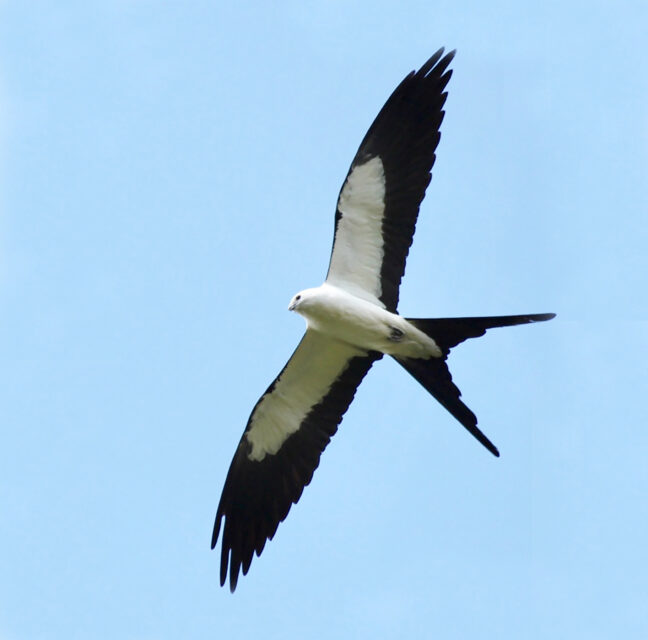
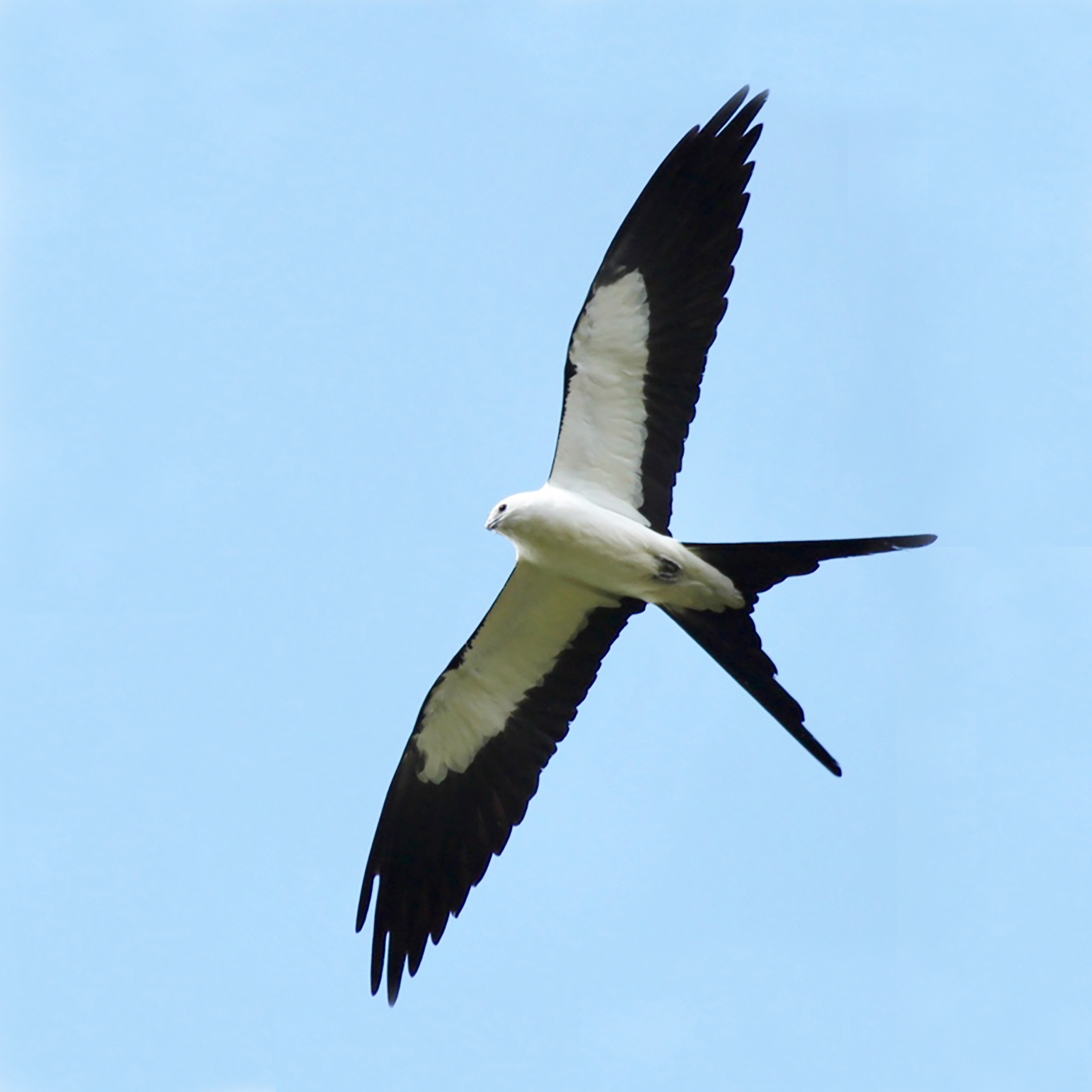
If you glance up at the sky this month and catch sight of a striking black-and-white bird gliding effortlessly overhead—with a deeply forked tail like a ribbon trailing behind—you’ve likely spotted a swallow-tailed kite. May is a special time here in Southwest Florida, because it marks the return of these graceful aerial acrobats to our Verandah skies.
Each year, swallow-tailed kites migrate thousands of miles from their wintering grounds in South America, traveling across the Caribbean and into Florida. By late April and early May, they arrive in our area, drawn to the warm air, abundant food, and tall trees that provide ideal nesting sites. Their return is one of nature’s quiet seasonal celebrations—no fanfare, just the sudden reappearance of elegance in motion overhead.
Swallow-tailed kites are built for flight. With long, narrow wings and that unmistakable forked tail, they can twist, turn, and glide with incredible precision. Watching one is like watching a gymnast in the sky—effortless, fluid, and mesmerizing.
Perhaps most remarkable is how they eat. These birds rarely land to feed. Instead, they catch insects in the air and sometimes swoop down to catch small reptiles while flying—sometimes transferring food from their feet to their beak midair without missing a beat. But their diet isn’t limited to what they can snatch from the air. Swallow-tailed kites are also known to raid nests of other birds, especially during the nesting season. With quiet precision, they slip into the treetops and take eggs or very young chicks from unattended nests.
Florida is one of the few places in the United States where swallow-tailed kites nest. They prefer tall trees—often pines or cypress—near open areas and water. As May turns into June, pairs begin building nests and raising their young. If you’re lucky, you might see a pair circling together, calling softly, or carrying nesting material high into the treetops.
Swallow-tailed kites were once much more widespread across the southeastern United States, but habitat loss reduced their numbers significantly. Today, Florida is a stronghold for the species, and their presence is a reminder of the importance of preserving open spaces, wetlands, and large trees.
Seeing them overhead isn’t just beautiful—it’s meaningful. It tells us that the habitats they depend on are still here, supporting one of North America’s most elegant birds. So this May, take a few extra glances at the sky. The kites are back—and with them, a reminder of just how extraordinary the natural world can be, right here in Verandah.
10 INTERESTING FACTS ABOUT SWALLOW-TAILED KITES
1. Their deeply forked, scissor-like tail isn’t just beautiful—it acts like a steering tool, helping them make sharp, graceful turns in the air.
2. They are aerial specialists. Swallow-tailed kites spend most of their lives in flight and can glide for long stretches without flapping their wings.
3. Dragonflies are a favorite food. In Florida, you’ll often see them soaring over wetlands where dragonflies are plentiful.
4. Before migrating south in late summer, they gather in large groups—sometimes dozens or even hundreds—spiraling together in the sky. When groups of kites circle together on rising warm air, it’s called a kettle. Watching dozens of them spiral upward at once is one of the most breathtaking sights of late summer in Florida.
5. Most of the U.S. population nests in Florida, making our region especially important for their survival.
6. They almost never perch. Unlike many birds of prey, swallow-tailed kites are rarely seen sitting still. They prefer to stay aloft, even drinking water by skimming the surface in flight.
7. They can drink and bathe midair. With a quick dip, they skim ponds or rivers, scooping up water without landing—sometimes even splashing lightly to bathe.
8. Juveniles have shorter tails and slightly duller coloring, so their elegant “scissor tail” look becomes more dramatic as they mature.
9. They use rising warm air to travel. Swallow-tailed kites ride thermals—columns of warm air—to soar high without using much energy, which helps them cover long distances during migration.
10. They are named for how they fly. They are called kites because their graceful, floating flight resembles a kite (the kind you fly on a string). With long wings held steady and that forked tail acting like a rudder, they seem to glide and drift effortlessly through the sky—just like a paper kite riding the wind.