

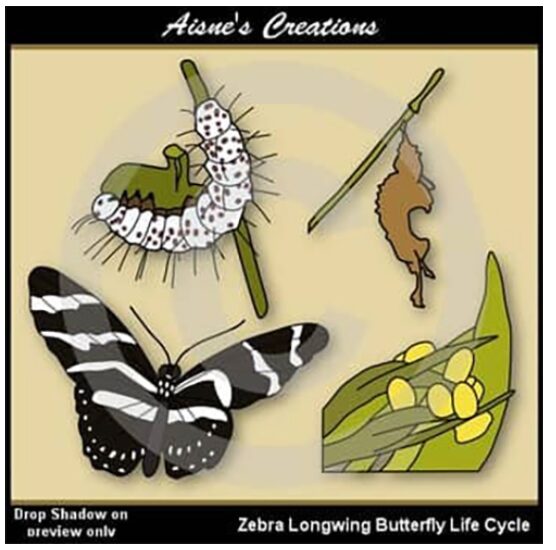
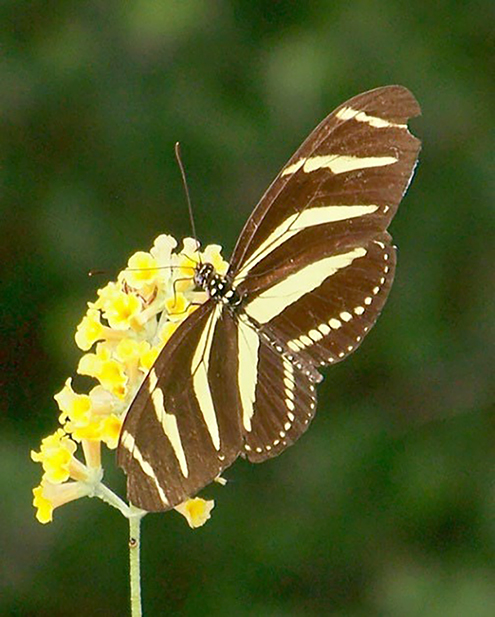
Butterflies! Butterflies! Florida is home to well over 100 species. Many of these can be seen fluttering in your yard and throughout Verandah. The warm humid climate of Southwest Florida makes it a perfect habitat for these lovely creatures. One of the most interesting of this group is the Zebra Longwing (Heliconius charithonia), our state butterfly. Reminiscent of a zebra, it can be easily identified by its long black, narrow wings striped with white or light-yellow lines. This butterfly displays many unique, fascinating behaviors that set it apart from other butterflies.
One of the most unusual traits of the Zebra Longwing is that it lives longer than other butterflies. Most butterflies have a life span of 1 to 2 weeks, but the Zebra Longwing can live up to 6 months. What makes this possible is its diet. All butterflies drink the nectar from flowers for food, but the Zebra Longwing has the ability to consume the plant pollen as well. The protein from the ingested pollen provides enough energy for the butterfly to survive for a longer period. The additional nutrients also allow the female to be prolific, laying more eggs at one time than other butterflies.
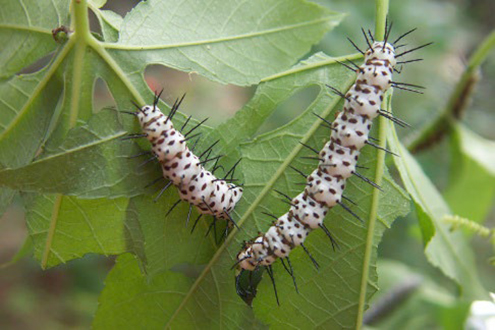
The Zebra Longwing lays its eggs in clusters on its host plant which is the Passionflower. The emerging larvae or caterpillars begin feeding furiously on the leaves. The ingested leaves contain a chemical, making both the caterpillar and butterfly toxic to predators. The black bristled white caterpillar and the striped coloration of the adult butterfly send a warning to its predators to stay away!
Another unique behavior only performed by the Zebra Longwing is called pupal mating. In this behavior the female emits a pheromone or scent when she is ready to emerge from her chrysalis (cocoon). This sends a message to the male butterflies that she is ready to mate. The attracted male butterflies fight with one another hoping they will win the chance to mate. The winner of the conflict will mate immediately after the female emerges and in some instances before.
Zebra Longwings are a social bunch. At night they will gather in large numbers and roost together. They return to the same spot every night. The oldest butterfly in the group selects their roosting spot, frequently high in a tree. This behavior is for protection and warmth.
Lastly, Zebra Longwings are said to be intelligent. They will remember and return to the same plant time after time if they find it a good food source. If you see one when feeding on a flower in your yard, lucky you! It will most likely be back! To attract Zebra Longwings and other butterflies to your yard include a variety of butterfly-attracting plants in your landscape such as firebush, native milkweed, Ixora, Panama Rose and Jatropha.
It’s no wonder why the Zebra Longwing was named in 1996, the Florida State Butterfly. Without a doubt, its beauty and uniqueness make it a standout among butterflies.