


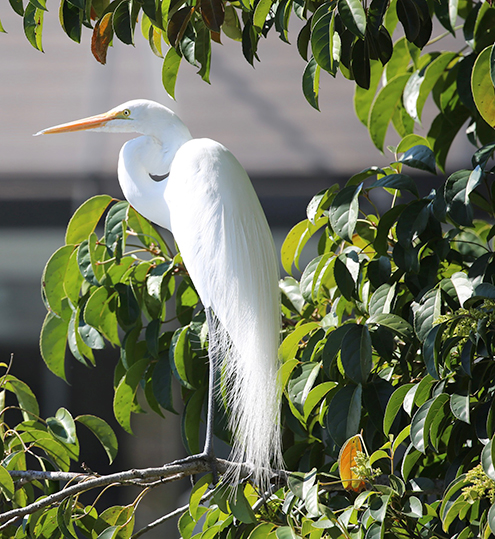
GREAT WHITE EGRET- VERANDAH’S ELEGANT SENTINEL
Few sights in Verandah feel as quietly majestic as a Great White Egret standing motionless along a pond’s edge—snow-white feathers glowing against dark water, neck curved into a graceful S, eyes fixed with intense focus. Or perhaps you have seen them perched in a tree. Often mistaken at a glance for a heron or an ibis, this elegant bird is one of Florida’s most iconic wetland residents and a frequent, welcome presence in our community.
The Great White Egret is tall and statuesque, reaching about 3½ feet in height with an impressive wingspan that can exceed five feet. Its brilliant white plumage, long black legs, and sharp yellow/orange bill make it easy to recognize. During the breeding season, adults grow delicate, wispy plumes on their backs—feathers once so coveted they nearly led the species to extinction.
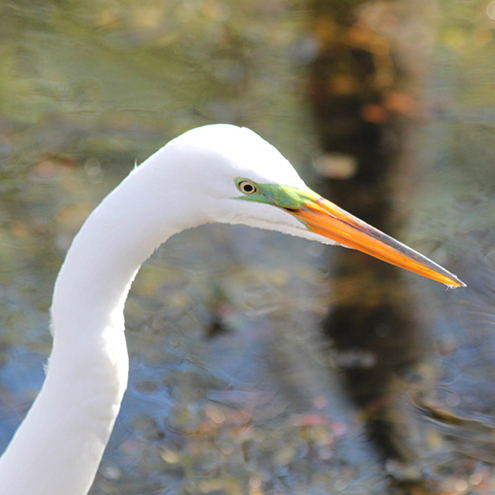
One of the most fascinating changes happens around the egret’s face during mating season. As spring approaches, the normally yellow skin between the eye and the bill (called the lores) can turn a vivid green, a visual signal that the bird is ready to breed. The bill itself may intensify in color, appearing brighter than usual. These subtle facial color changes, combined with the flowing breeding plumes, give the Great White Egret an especially striking look at this time of year.
Watching a Great White Egret hunt is a lesson in patience. It may stand perfectly still for minutes at a time before striking with lightning speed. Fish make up much of its diet, but it also feeds on frogs, small reptiles, insects, and even the occasional small mammal.
The Great White Egret holds a special place in conservation history. In the late 1800s and early 1900s, egrets were heavily hunted for their plumes, which were used to decorate fashionable lady’s hats. Their dramatic decline helped spark the bird conservation movement and led to the creation of protective laws and organizations dedicated to bird protection. Thanks to those efforts, the Great White Egret has made a remarkable comeback—and seeing one today is a reminder of what conservation can achieve.
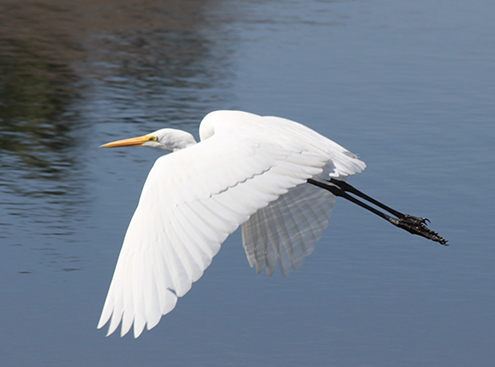
Verandah’s mix of ponds, wetlands, and natural areas makes it an ideal stop for Great White Egrets. Some are year-round residents, while others pass through seasonally. Early mornings and late afternoons are the best times to spot them, especially during breeding season when their colors and plumes are at their most dramatic and the light catches their feathers, turning them almost luminous. The next time you see that flash of white along the water in Verandah, pause for a moment. You’re not just seeing a beautiful bird—you’re seeing a symbol of resilience, patience, and the enduring wildness that makes our community such a special place to live.
10 Interesting Facts About Great White Egrets:
1. The Great White Egret is one of the largest and most recognizable white wading birds in North America. They are sometimes confused with snowy egrets which are smaller.
2. They nest in colonies, often alongside herons, ibises, and other egrets in trees near water.
3. Both parents help raise the chicks, taking turns guarding the nest and bringing food.
4. They fly with their necks pulled back into an “S” shape, unlike cranes, which fly with necks stretched straight out.
5. Great White Egrets are found on every continent except Antarctica, showing remarkable adaptability.
6. Great White Egrets hunt alone, even though they nest in colonies—solitary feeding reduces competition for prey.
7. They can change hunting strategies, usually slowly stalking prey, other times actively stirring the water with a foot to flush fish out.
8. Their eyesight is exceptionally sharp, allowing them to judge distance accurately before striking underwater prey.
9. They are highly sensitive to water levels, and sudden drops or rises in pond depth can cause them to abandon a feeding area entirely.
10. During breeding season, Great White Egrets perform an elegant courtship display. Males grow long, lacy plumes and use slow neck stretches, plume fluffing, wing spreading, and bill clattering to attract a mate. When a female accepts, the pair bond through gentle mutual preening before mating and nesting begins.