

THE MUSCOVY DUCK: VERANDAH’S UNUSUAL WADDLER
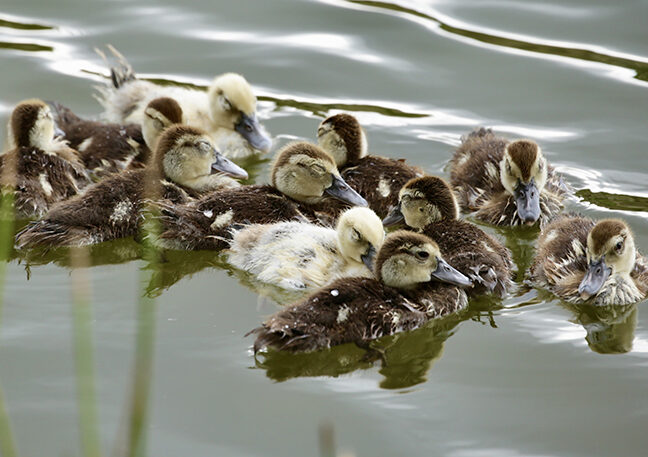
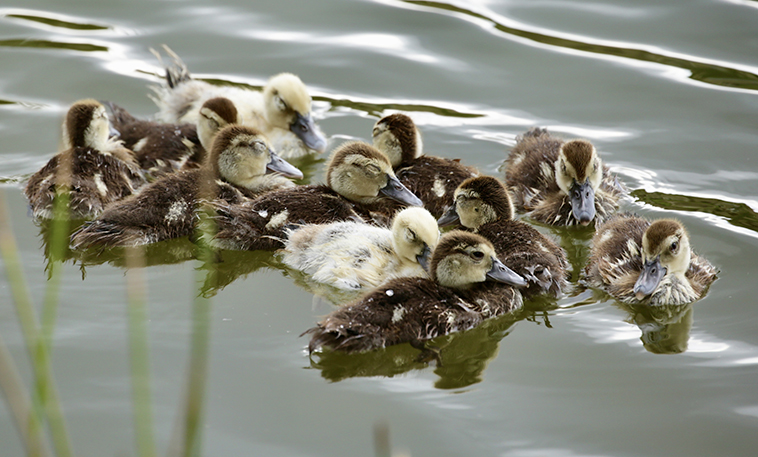
A friend of mine recently invited me over to photograph a new addition to the Cottonwood Bend neighborhood—Muscovy ducks have made themselves right at home on the pond. Not long after settling in, they surprised residents with a brood of fluffy ducklings, often seen trailing closely behind their mother along the water’s edge or on the lawn. Watching this little family offers a charming reminder of how wildlife continues to thrive right alongside us here in Verandah.
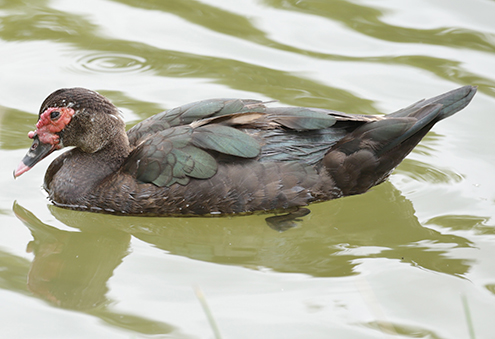
One of the first things people notice about a Muscovy is the bright red skin around its eyes and bill. These fleshy bumps are called caruncles. While they may look unusual, they are perfectly normal for this species and tend to become more pronounced as the bird ages, especially in males. Most Muscovies you’ll see in Verandah are a mix of black and white feathers, often in bold, patchy patterns. Their dark feathers can appear glossy black at first glance, but in the sunlight they often shimmer with iridescent greens and purples. Not all Muscovies look the same, though. Some have more white, some more dark coloring, and others may appear brown, gray, or mottled, especially females or younger birds. You might even notice individuals that are mostly white with just a few dark patches—or the reverse.
Another surprising thing about Muscovy ducks is that they don’t quack like most ducks. Instead, they communicate with soft hisses, coos, and gentle trills. Males often make a low huffing sound, especially during courtship. This quieter voice makes them noticeably different from mallards or other common ducks that fill the air with loud quacking.
Muscovies thrive in warm climates, which is why they do so well in Southwest Florida communities like Verandah. Unlike most North American ducks that came from Europe or Asia, these ducks are native to Central and South America. They are excellent flyers and, unlike many domestic ducks, they can sometimes be seen perched in trees. Their strong claws on their webbed feet help them grip branches.
They are also surprisingly good for the environment around our homes. Muscovy ducks feed on insects, small invertebrates, and even mosquito larvae, helping keep pest populations in check.
Like many animals that adapt to human communities, Muscovy ducks sometimes spark mixed reactions. But they are part of the rich wildlife that surrounds Verandah—from egrets and herons to hawks and limpkins. These quirky ducks remind us that nature often shows up in surprising forms.
TEN INTERESTING FACTS ABOUT MUSCOVY DUCKS
1. A female can lay 10–15 eggs, usually in a quiet nesting spot under shrubs, near water, or sometimes in unexpected places like planters or sheltered corners around our lanais.
2. They are one of the largest duck species commonly seen in neighborhoods.
3. Their red facial skin (caruncles) helps with cooling.
4. Ducklings can swim within hours of hatching.
5. They often raise their wings and hiss if they feel threatened—more bluff than danger.
6. They can change how they look when they’re excited. Muscovies can raise the feathers on their heads into a little crest, making them look puffed up and more expressive.
7. They wag their tails like dogs when relaxed or happy- especially around food.
8. Their eggs take longer to incubate than most ducks- 35 days compared to 28 days for most other duck species.
9. They recognize familiar places—and people. Muscovies are creatures of habit and often return to the same feeding spots or nesting areas.
10. They have serious “side-eye.” Because of how they turn their heads, they will often look at you with one eye.