

The intense heat and humidity of summer is rapidly approaching and will be tough on plants. Many bedding plants say “no thanks” to this high heat and humidity. Surprisingly, there are some that thrive on these extreme conditions and will survive the sizzling summer months.
What is a bedding plant? A bedding plant is typically an annual that lasts one season. Most are flowering, some are noted for their colorful foliage. In Verandah, the annuals will flourish in the summer and continue to bloom and grow throughout the warm fall months. Annuals are bought blooming or near-blooming in a variety of sizes from big box stores or local garden centers. When added to the landscape, they add a pop of color, variety, and interest to their surroundings.
If planted in the right place, the following are annuals that have proven to be good choices for our summer landscape beds.
Pentas (Pentas lanceolata)
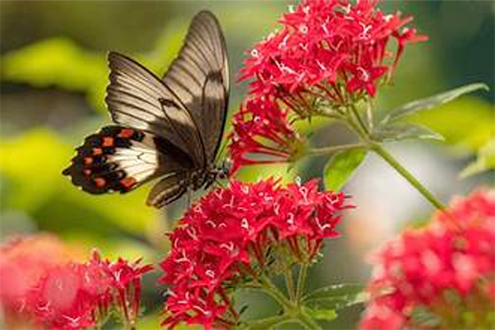
This plant is often referred to as Starflower because of their big clusters of star shaped flowers. A hardy plant that can handle both heat, full sun and rainfall. Pentas come in a variety of vibrant colors including red, pink, lavender, and white. They grow to a height of 18-24 inches. Shorter, dwarf cultivars make a great border plant. In the summer, they put on a show planted in mass at the Verandah entrances and bullnoses of the community monuments. This plant benefits from regular deadheading to produce more blooms. Want to attract Butterflies? Butterflies love this plant! Red Glow, an old fashion Pentas is their favorite.
Vinca (Catharanthus roseus)
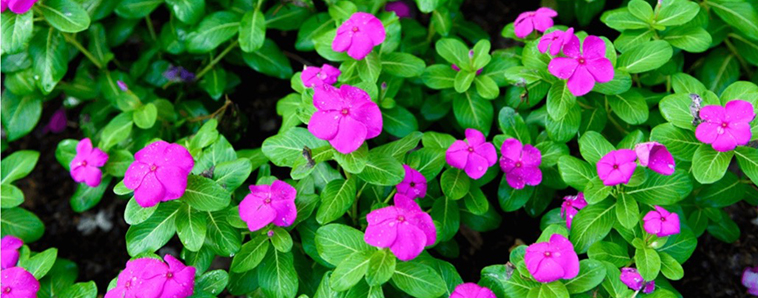
Vinca or Periwinkle is an easy care, heat and drought tolerant plant. It thrives in full to part sun and grows to a height of 7-24 inches, depending on the cultivar. This plant comes in soft pink, purple, white and bicolor. Vincas are used for edging, mass plantings and as container plants. Summer rain can be challenging for this plant as they do not like over watering which can lead to fungal diseases. Planting in well-drained soil is a necessity.
SunPatients (Impatient spp.) SunPatients, an Impatient hybrid, was cultivated to specifically withstand high heat and humidity. Unlike the traditional shade loving Impatient, these plants can tolerate sun. Morning or part sun is best. Strong sun should be avoided. Sunpatients have a mounding habit and grow 16-36 inches depending on the variety. Sunpatients are thirsty plants and should be kept evenly moist.
Portulaca (Portulaca grandiflora)
There are over 100 plants in the Portulaca family. Moss Rose and Purslane are the 2 species that are the popular bedding plants. Both are succulents and have a spreading habit. The main difference between the 2 is the shape of leaf. Moss Rose has a cylinder-shaped leaf, and purslane has a flattened, tear drop shaped leaf. They tolerate heat and humidity and love sun. Both come in an array of colors and are hardy bedding plants requiring minimal care. When planted in mass they form a carpet of color. The flowers on these plants close in late afternoon and on cloudy days. Bonus-Purslane leaves are nutritious and can be eaten cooked or raw.
Coleus (Coleus scutellarioides)
This plant is endeared for its outstanding foliage rather than its flower. Leaf color in combinations of pink, red, yellow, and greens make this plant a standout in the landscape and when used in containers. It is easy to care for and grows best in part sun. However, newer varieties have been developed that can now grow in full sun. Pinching back stems and removing their insignificant flower encourages fuller and healthier plants. Coleus is easy to propagate from stem cutting. Remove lower leaves and place in water or a soil medium.
Other heat-resistant resistant annuals include salvia, celosia, marigolds, angelonia, potato vine, and zinnia. Remember that all heat-resistant summer annuals, just like us, can use a reprieve from the brutal heat. Keep your plants watered but not over-watered, monitor for pests and fungal diseases, apply a fertilizer when allowed and most of all enjoy their colorful addition to your landscape!
Happy Gardening!