


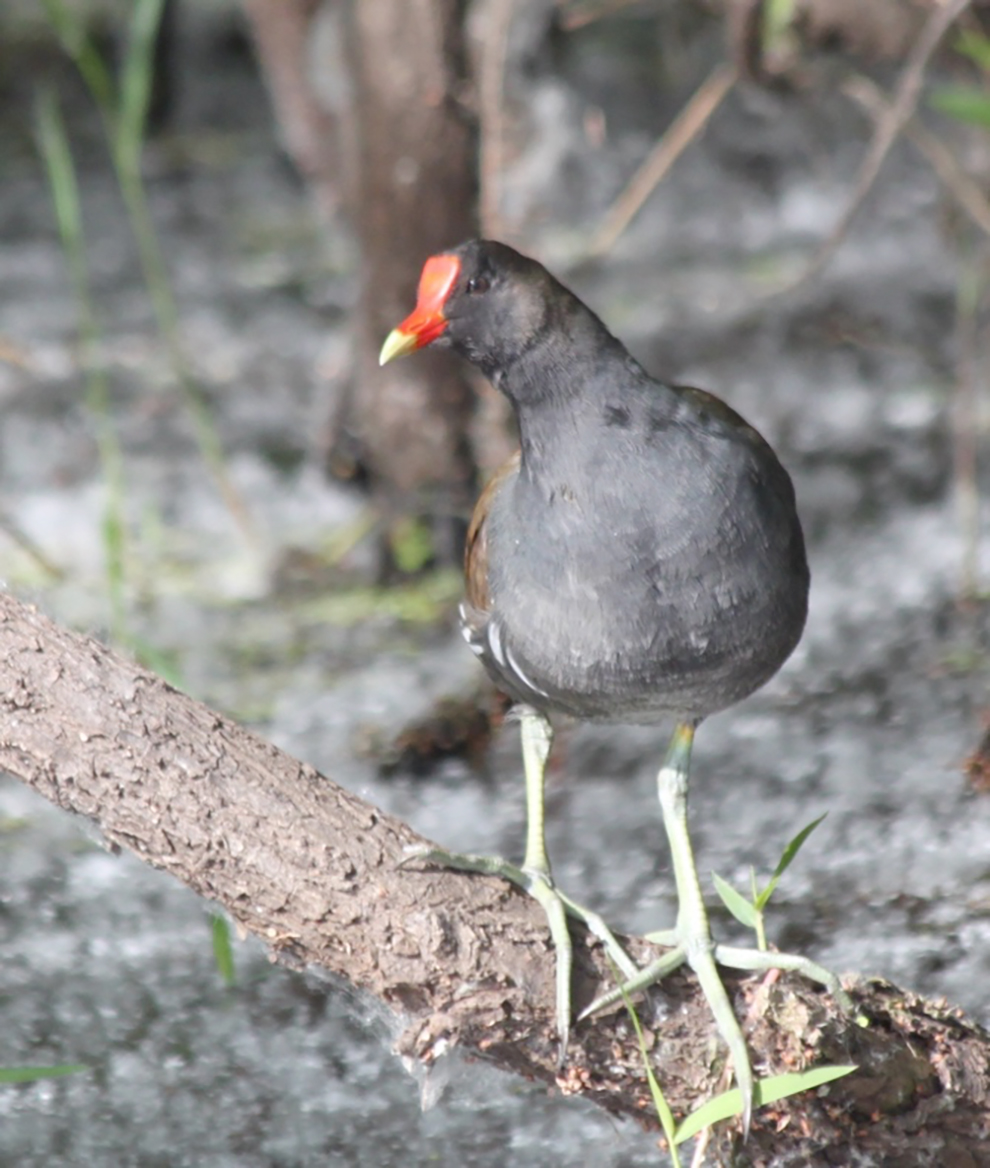
COMMON GALLINULE
If you’ve walked or biked along Verandah’s ponds, or marsh edges lately, you may have noticed a striking bird slipping through the reeds. This bold little resident is the Common Gallinule, nicknamed the Marsh Hen. With its bright red facial shield, yellow-tipped bill, and long yellow legs, it adds a splash of color to our waterways year-round.
The Common Gallinule thrives in exactly the type of habitat Verandah provides – calm, shallow waters framed by cattails, grasses, and floating vegetation. Unlike ducks, which paddle steadily on the surface, gallinules seem to strut, hop, and tiptoe across the water, using their long toes to distribute their weight as they walk on vegetation mats. From a distance, they sometimes appear to be walking on water.
Adult gallinules are hard to miss. Their plumage is mostly dark charcoal gray, but the real attention-grabber is that brilliant red forehead shield, a feature that makes the bird look as though it’s wearing a glossy little helmet. The bill, tipped in bright yellow, creates a vivid contrast you’ll catch even from across a pond.
Another interesting feature is their leg color, which changes dramatically through the year. While their legs are normally a yellow-green, during breeding season they transform into a vivid, almost neon-green shade. To other gallinules, those bright green legs are a glowing signal of readiness to mate.
Common Gallinules aren’t shy about letting you know they’re around. Their vocalizations range from sharp cackles to clucks, croaks, and squeaks—sometimes sounding like a chicken hiding in the marsh, which explains the nickname Marsh Hen.
Their nests are usually tucked into dense vegetation over the water, hidden from predators but close enough for the chicks to slip right into the water when ready. Gallinule chicks are dark, fuzzy, and charmingly awkward, with tiny wings and giant feet—perfect for learning to walk among the mats of vegetation.
These adaptable birds forage both on land and in water. You may spot them picking insects and small snails off floating plants, dipping their heads underwater for vegetation, or walking along the shore eating seeds and tender shoots. This diverse diet helps them thrive in Verandah’s managed ponds, where the varied plant life supports healthy marsh ecosystems.
Gallinules can be surprisingly feisty. They defend territories vigorously, especially during breeding season, and their chases—feet slapping across the water—are both dramatic and entertaining.
Because gallinules rely on healthy freshwater wetlands, they’re a living indicator of the ecological balance in Verandah’s ponds and wetlands. Their presence tells us that our waterways support enough vegetation, insects, and safe nesting areas to sustain wildlife.
Pause near a marshy edge at dawn or dusk. You may spot a gallinule slipping quietly through the reeds—or hear one first, calling from somewhere just out of view. Whether strutting across vegetation, flashing those bright spring-green legs, or escorting a brood of fuzzy chicks, the Common Gallinule is one of Verandah’s most charming wetland neighbors.
10 FUN FACTS ABOUT THE COMMON GALLINULE (MARSH HEN):
1. They can walk on floating plants thanks to oversized toes that prevent them from sinking.
2. Their forehead shield deepens in color during breeding season or excitement.
3. They are excellent swimmers—but are more closely related to coots and cranes than ducks.
4. Their chicks have charming, odd “goblin-like” fuzzy faces with colorful markings.
5. When startled, they often run across the water before flying.
6. Their calls sound like a barnyard chicken hiding in the reeds.
7. They build floating nests woven into marsh vegetation.
8. Parents may raise large broods of 5–10 eggs or more.
9. Their long toes let them climb reeds and shrubs surprisingly well.
10. They are year-round residents in Verandah, often raising multiple broods each year.