

THE MIMIC OF VERANDAH: THE NORTHERN MOCKINGBIRD
If you’ve ever been serenaded on an early morning walk through Verandah or paused on your lanai to hear a medley of whistles, trills, and chirps that sound like several birds in one, you’ve likely met our talented neighborhood performer—the Northern Mockingbird. (*).
Mockingbirds are among the most recognizable and entertaining birds in Verandah. Perched high on a palm frond, rooftop, or streetlight, they sing with gusto—sometimes for hours. Mockingbirds will borrow tunes from other birds, frogs, and even cell phone ringtones! Their scientific name, Mimus polyglottos, literally means many-tongued mimic, an apt description for their astonishing vocal range.
While many birds’ songs go quiet after spring breeding season, mockingbirds in Florida often sing year-round thanks to our mild climate. Their songs serve multiple purposes—attracting mates, defending territory, and simply announcing their presence. Males are the more persistent singers, but females can be heard too, especially during nesting season when both parents are busy defending their turf.
Mockingbirds are fiercely territorial and will bravely dive at crows, hawks, and even the occasional unsuspecting golfer who wanders too close to their nest. Yet when not protecting their young, they are graceful foragers, hopping across lawns or landscaped beds in search of insects, berries, and fruit.
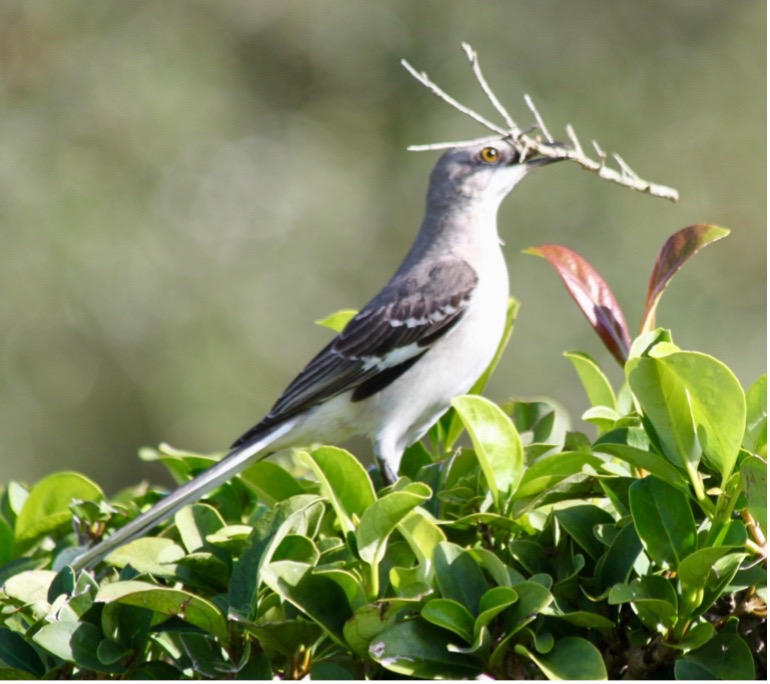
They have soft gray plumage on top with a paler underside and distinct white patches on the wings and outer tail feathers that flash when in flight. When they spread their wings or flick their tails, those bright white accents catch the eye, a display believed to help startle insects or warn intruders.
Mockingbirds typically build their nests in dense shrubs or small trees, often three to ten feet off the ground—just high enough to keep their young safe from predators but low enough to watch closely. You can spot several nests in the Shady Lady trees on Verandah Boulevard. The male begins the construction, weaving a sturdy foundation of twigs, and the female finishes it with a softer lining of grasses. They can raise two to three broods a year, taking advantage of Florida’s long warm season. Both parents share the duties of feeding and fiercely guarding their chicks until they fledge.
Beyond their beauty and boldness, mockingbirds hold a special place in Florida’s heart—they are our state bird, chosen for their intelligence, adaptability, and cheerful song that brightens communities across the state. So next time you hear a medley drifting through the air—part cardinal, part warbler, part mystery—pause and look up. That’s likely Verandah’s resident virtuoso, the Northern Mockingbird, performing a concert just for you.
TEN INTERESTING FACTS ABOUT MOCKINGBIRDS
1. The Northern Mockingbird became Florida’s official state bird in 1927.
2. They are master mimics. Some individuals can imitate over 200 different songs from other birds and sounds in their environment.
3. Unmated males often sing through the night, especially under a full moon.
4. Mockingbirds will dive at much larger animals—including people—to defend their nests.
5. Unlike many songbirds, mockingbirds stay in Florida all year long.
6. They eat insects in the summer and switch to berries and fruit in the cooler months.
7. Studies show mockingbirds can recognize individual humans who’ve approached their nests before.
8. They often flick or spread their wings in short bursts—possibly to startle insects or show dominance.
9. Across cultures and literature, the mockingbird is seen as a symbol of joy and freedom.
10. They prefer open areas with scattered trees and bushes—perfectly suited to Verandah’s landscape design.