

VERANDAH’S BALD-HEADED BIRD: THE WOOD STORK
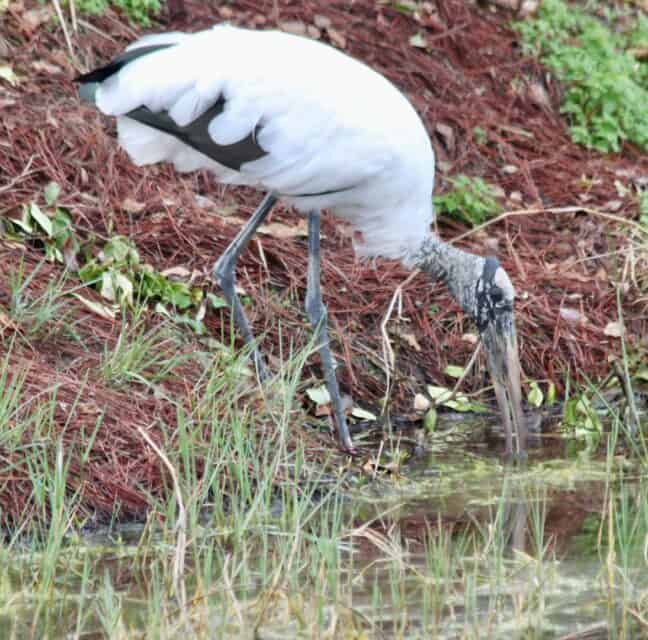
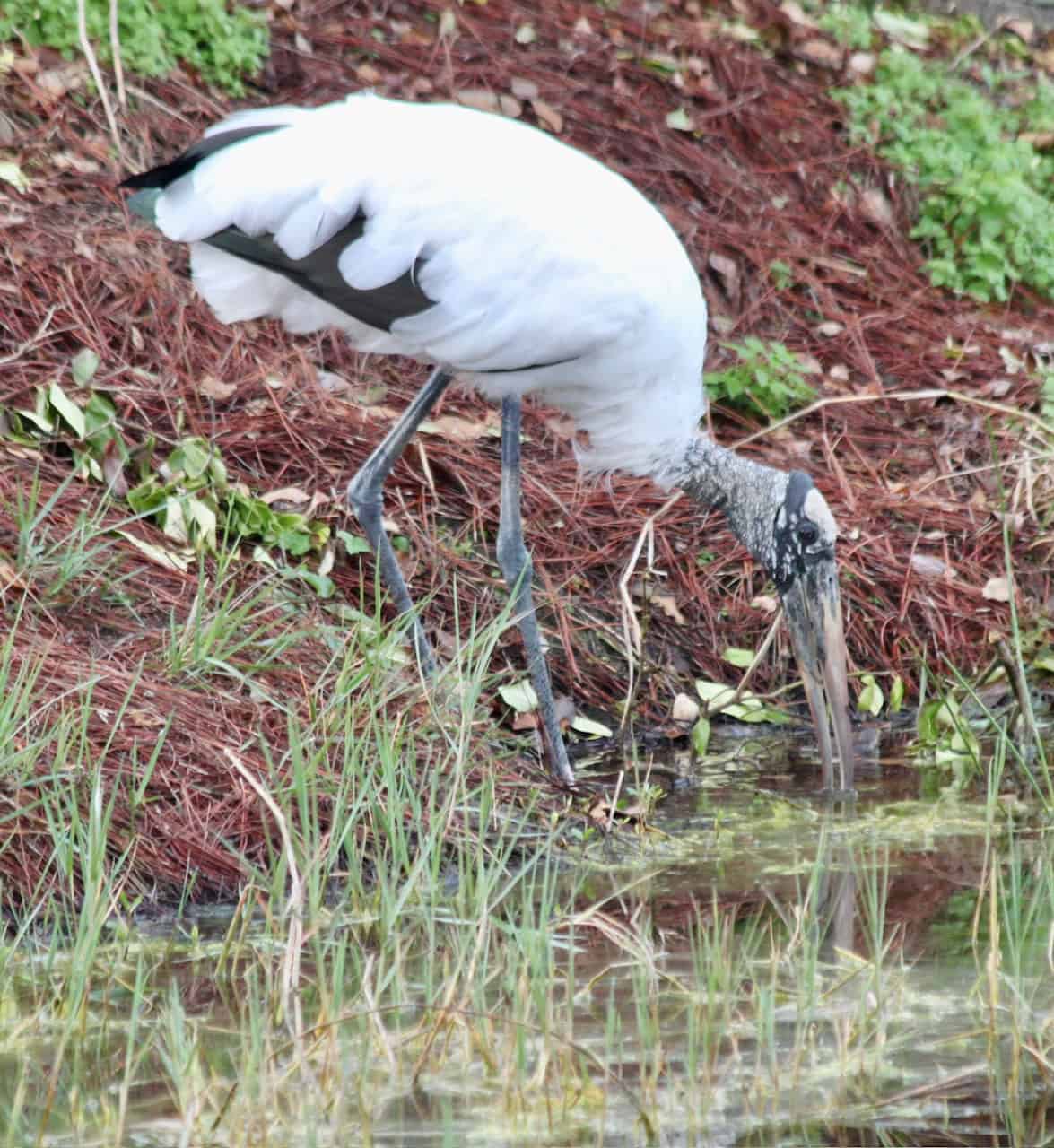
There’s something timeless about the sight of a wood stork wading through the ponds of Verandah. With their long legs, slightly hunched shoulders, dark bald heads and heavy, down-curved bills, these prehistoric-looking birds hold a special place in Verandah’s natural world.
At first glance, a wood stork might look like an old man with its featherless, wrinkled head covered with rough, scaly skin that ranges from dark gray to black, giving them an aged, weathered look. Their long, heavy bills curve downward and are perfectly designed for their unique feeding style.
This unusual combination of features isn’t just for show. As wood storks wade through shallow water, they plunge their heads into the shallows, sweeping their long, down-curved bills back and forth in search of prey using a technique called tactile feeding. When a small fish or frog brushes against the bill, it snaps shut in a lightning-fast reflex, catching the prey in an instant. It’s a fast, almost automatic reaction. If the wood stork had feathers on its head, they would quickly become soaked, muddy, and tangled. Instead, the featherless, almost prehistoric-looking skin helps the stork stay clean and efficient as it feeds—making its unusual appearance a perfect match for its specialized feeding style.
If you look up and see a wood stork soaring overhead, you will notice that unlike smaller birds that flap their wings constantly, wood storks ride the warm, thermal currents high above the trees, barely moving their wings at all. With wingspans that can stretch up to five feet, wood storks glide gracefully on broad, black-edged wings, their long necks extended and legs trailing behind like streamers.
While wood storks are often seen alone in Verandah, standing still by the ponds or soaring silently through the sky, they aren’t truly solitary creatures. This quiet, solitary appearance is part of their feeding strategy. To catch prey efficiently, wood storks spread out across wetlands, each bird slowly wading and sweeping its long bill through the water to avoid scaring fish away. Crowding together would make hunting much harder. However, when it’s time to nest, wood storks gather in large colonies—sometimes with dozens or even hundreds of nests in a single area. While they may appear solitary at first glance, these birds are actually quite social when it comes to raising their young. Two areas near Verandah where wood storks have nested in large numbers include Lenore Island in the Caloosahatchee River and the Corkscrew Swamp Sanctuary, although numbers there have declined in recent years.
Wood storks are considered a conservation success story. Once on the brink of extinction due to habitat loss, they have made a slow but steady comeback thanks to wetland restoration efforts across the state of Florida. Despite these successes, wood storks remain vulnerable to environmental changes, particularly the alteration of wetlands and cypress tree habitats used for nesting.
So the next time you spot a wood stork wading in the shallows or soaring above the trees, pause for a moment and admire this remarkable bird. They are a symbol of resilience and a reminder of how preserving natural spaces is crucial for supporting wildlife that depends on healthy wetlands—and that we can find ways to share our environment with these special birds.
TEN INTERESTING FACTS ABOUT WOOD STORKS:
1. Wood storks are the only native stork species found in the United States.
2. A wood stork’s wingspan is about the size of a small adult human lying down.
3. Wood storks nest in large groups called colonies, often sharing the trees with herons, egrets, and ibises.
4. A wood stork’s nest can reach over three feet across and two feet deep, made of sticks and lined with greenery. It’s the size of a small bathtub.
5. Wood storks can travel over 50 miles in a single day to find food, soaring across the landscape in search of fish-rich wetlands.
6. Wood storks cool off in the high heat by urinating on their legs, a process called urohidrosis. The evaporating liquid helps regulate their body temperature—an unusual but effective cooling method, similar to how humans sweat.
7. Early settlers nicknamed wood storks “Flintheads” because their bald, dark heads resembled pieces of flint.
8. In the wild, wood storks can live over 20 years.
9. Scientists consider wood storks an “indicator species” because their health reflects the overall condition of the environment.
10. Growing wood stork chicks are hungry. A single chick can consume up to 1.6 pounds of fish daily, which is a huge portion compared to its body weight. That’s like a 100-pound person eating 50 pounds of food a day!